

In This Article
Picaridin vs DEET mosquito spray is the argument that resurfaces every bug season on trail forums, job sites, and hardware-store aisles. Annoyingly, both camps are partly right. DEET is the grizzled veteran, developed for the U.S. Army in the 1940s and backed by decades of lab and field data. Picaridin is the newer, politer challenger: nearly scentless, easy on skin, and (the part gear nerds love) unbothered by your watch crystal.
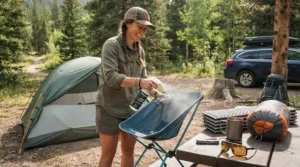
So which one wins? It depends on what you’re protecting. Your skin? Your sunglasses? Your sanity on a ten-hour shift beside a drainage ditch?
Here’s the plan. Below you’ll find seven real products, four DEET and three picaridin, sorted from budget to premium. Everything comes from label data, public-health guidance, and aggregated review sentiment. Nothing comes from an invented field diary. You’ll get the numbers on DEET concentration for mosquito spray, the truth about protection duration, and a frank look at what is actually plastic and gear safe. You’ll also get a practical playbook for picaridin mosquito spray for outdoor workers, because a landscaper’s day looks nothing like a weekend camper’s.
One note up front: prices below are ranges, never exact figures. They move constantly, so check the current price before you buy.
Quick Comparison: 7 Mosquito Sprays at a Glance
| Product | Active Ingredient | Label Protection Claim | Best For |
|---|---|---|---|
| Sawyer Premium 20% Picaridin Pump Spray | 20% picaridin | Up to 12 hrs (mosquitoes/ticks) | Everyday all-rounder, gear-heavy users |
| Natrapel 8-Hour 20% Picaridin Pump Spray | 20% picaridin | 8 to 12 hrs, depending on package | Carry-on travel, anglers |
| Repel Tick Defense 15% Picaridin Aerosol | 15% picaridin | Check the label | Budget picaridin, tick country |
| 3M Ultrathon 34.34% DEET Lotion | 34.34% DEET | Up to 12 hrs | Long shifts, heavy bug pressure |
| Cutter Backwoods 25% DEET Aerosol | 25% DEET | Up to 10 hrs | Budget DEET, sweaty work |
| OFF! Deep Woods Insect Repellent VII | 25% DEET | Up to 8 hrs | Easy pump application |
| Repel 100 (98% DEET) | 98.11% DEET | Up to 10 hrs | Severe infestations only |
Look at the table and one pattern jumps out. The 20% picaridin sprays and the 25% DEET sprays land in the same ballpark for label hours, so the real separation is feel, smell, and what happens when the spray meets your gear. The Sawyer Premium 20% Picaridin Pump Spray is the safest default for most people, but if you’re facing nonstop swarms, 3M Ultrathon earns its premium. Budget shoppers should note that the Cutter Backwoods aerosol delivers DEET-class protection for the smallest outlay.
💬 Just one click — help others make better buying decisions too!😊
Top 7 Picaridin vs DEET Mosquito Spray Picks: Expert Analysis
1. Sawyer Premium Insect Repellent with 20% Picaridin (SP544 Pump Spray) — the picaridin default for skin and gear
If one product defines the “switch from DEET” movement, this is it. The 20% level is the sweet spot. EPA registration data, as summarized by poison-control educators, put 20% picaridin at roughly 8-14 hours against mosquitoes and ticks. The 10% concentration drops to about 3.5-8 hours. Retail listings promise up to 12 hours for mosquitoes and ticks and around 8 for biting flies and gnats. Plan on a realistic eight and treat the rest as a bonus. In practice, that puts it shoulder to shoulder with mid-strength DEET, minus the solvent behavior: spray your forearms, grab your phone, and nothing fogs.
Based on the spec comparison, this suits anyone who touches expensive plastic all day: radio carriers, photographers, anglers. Reviewers on major retail listings average in the mid-4-star range and keep praising the non-greasy feel and the lack of gear damage. The recurring gripes are modest. The bottle is hefty for ultralight kits, and some users say it doesn’t drive back heavy swarms the way high-percentage DEET does.
Pros:
- ✅ 20% picaridin delivers DEET-class mosquito protection
- ✅ Non-greasy and nearly scentless on skin
- ✅ Friendly to phones, watches, and synthetic fabrics
Cons:
- ❌ Bottle runs heavy for ultralight packing
- ❌ Won’t “push back” extreme swarms, some users say
Typically around $10-$12 for a 3-4 oz pump. Verdict: the strongest all-around value here.

2. Natrapel 8-Hour Pump Spray (20% Picaridin) — compact, carry-on-friendly picaridin
Natrapel’s selling point is portability. The 3.4 oz pump matches the maximum carry-on liquid size, which makes it a natural for travel days and tackle boxes. It uses the same 20% picaridin concentration as Sawyer, so the protection math is the same. Here’s the catch: label language varies across package versions, with some promising 8 hours and others up to 12 for mosquitoes and ticks. Treat eight hours as your planning number.
On the odor front, an older Practical Sailor comparison found it less greasy than a DEET rival but noticeably floral. So “odorless” isn’t a guarantee across every picaridin brand. Retail listings show ratings from roughly 4.3 to 4.7 stars, though review counts are much smaller than Sawyer’s. Many of the on-site reviews are flagged as collected through promotions, so weigh the praise accordingly. The consistent theme is gear safety: no melted jackets, no clouded fishing line.
Pros:
- ✅ TSA-friendly 3.4 oz pump size
- ✅ Safe around fishing line and synthetics
- ✅ Same 20% picaridin strength as the category leader
Cons:
- ❌ Some users report a noticeable floral scent
- ❌ Label hours vary between package versions
Expect roughly $8-$13, depending on size and multipacks. Verdict: great for travel, with fewer independent reviews than Sawyer.
3. Repel Tick Defense (15% Picaridin Aerosol) — budget picaridin in a fast-spray can
This is the lower-cost, higher-convenience entry in the picaridin camp. A 6.5 oz aerosol covers a lot of ground quickly, which matters when you’re treating arms, necks, and ankles before a shift. The 15% concentration sits between the 10% and 20% tiers, and that’s where caution belongs. Consumer Reports’ recommended picaridin products cluster at 20% (plus one at 10%), so 15% is a less-charted middle tier. Logically, expect protection duration to land between the 3.5-8 hour and 8-14 hour ranges reported for 10% and 20%. Check the label for the manufacturer’s actual claim.
I could not verify a meaningful pool of independent reviews for this exact product, so treat it as a lower-evidence pick. The attraction is price and format: aerosol speed without DEET’s plastic-melting reputation. One practical tip from Consumer Reports’ advice applies to any aerosol: spray it onto your palms, then apply to your face rather than spraying near your eyes.
Pros:
- ✅ Very low cost per ounce
- ✅ Aerosol covers large areas quickly
- ✅ Picaridin means no plastic-fogging worries
Cons:
- ❌ 15% strength has thinner independent testing
- ❌ Aerosol drift wastes product in wind
Often under $8 for a 6.5 oz can. Verdict: a sensible budget experiment, but not my first choice for ten-hour days.
4. 3M Ultrathon Insect Repellent Lotion (34.34% DEET) — controlled-release lotion built for marathon days
Ultrathon is the ultra-endurance option. Its polymer-based, controlled-release lotion was developed for the U.S. military, and the EPA-stamped label promises up to 12 hours against mosquitoes. A Navy and Department of Defense repellent fact sheet frames the real range as roughly 6-12 hours depending on climate and conditions. That spread is the honest takeaway: long label hours, shifting reality. Because it’s a lotion, you place it deliberately, and there’s no aerosol drift onto your gear. That’s a quiet advantage with DEET.
The concentration is just above the 30% line most guidance treats as the practical ceiling. The extra points buy the polymer-slowed release, not a stronger “force field.” Forum users call it a long-time favorite but report that it has become hard to find, so availability may fluctuate. Still, DEET is DEET: it remains hard on plastics and synthetics, so wash your hands before touching anything precious.
Pros:
- ✅ Longest label claim in this lineup
- ✅ Lotion format avoids overspray onto gear
- ✅ Military-developed controlled-release formula
Cons:
- ❌ DEET still attacks plastics and synthetics
- ❌ Availability can be spotty
Roughly $8-$12 per 2 oz tube; check current price. Verdict: the pick for brutal, buggy, all-day shifts.
5. Cutter Backwoods Insect Repellent (25% DEET Aerosol) — the budget DEET workhorse
Twenty-five percent DEET sits squarely in the zone Consumer Reports calls most reliable (25-30%), and Cutter wraps it in a sweat-resistant aerosol with a label claim of up to 10 hours. In a consumer comparison of four bug sprays, this one was named best overall, partly for the lowest price per ounce and partly because its faint scent faded within about twenty minutes. Retail listings average roughly 4.6 stars across a couple hundred reviews, and buyers repeatedly mention that it goes on wet but dries fast.
The analytical take: this is the “I need DEET and I need it cheap” answer. For sweaty outdoor labor, sweat resistance matters as much as the percentage, because perspiration shortens real-world protection. What the spec sheet won’t tell you is that aerosol DEET and gear are a risky pairing. Overspray lands on sunglasses, clipboards, and synthetic vests. Spray on a cleared, upwind patch of ground, not over your kit.
Pros:
- ✅ Lowest cost per ounce in this roundup
- ✅ Sweat-resistant, 25% DEET formula
- ✅ Dries quickly with a fading scent
Cons:
- ❌ Aerosol overspray can damage nearby gear
- ❌ Still carries a “bug spray” smell
Around $5-$9 for a 6-7.5 oz can. Verdict: unbeatable bang for the buck if you’re careful with your gear.

6. OFF! Deep Woods Insect Repellent VII (25% DEET Pump Spray) — controlled pump spray at a familiar strength
The pump bottle is the point here. Same 25% DEET family as Cutter, but delivered as a directed stream that makes it easier to keep product off your gear. The label promises up to 8 hours of protection against mosquitoes, with a repellent effect on ticks, biting flies, gnats, and chiggers. Eight hours is shorter than Cutter’s 10-hour claim, which is worth remembering if your shift is long.
Review sentiment across the Deep Woods family sits in the mid-to-high 4-star range, with one grocer’s listing for this exact pump at roughly 4.7 stars across a few hundred ratings. Shoppers appreciate the brand familiarity and widespread availability, since it’s stocked almost everywhere. Based on the spec comparison, it’s a sensible middle path for people who want DEET’s track record without aerosol’s overspray problem. Scent varies by version, and some Deep Woods formulas read as distinctly “bug spray,” so sniff before you commit if you’re sensitive.
Pros:
- ✅ Pump delivers a controlled, targeted spray
- ✅ Widely stocked and easy to restock
- ✅ Consistently strong retail ratings
Cons:
- ❌ 8-hour claim trails Cutter and Ultrathon
- ❌ Scent can be noticeable on some versions
Typically $7-$11 for a 6 oz pump. Verdict: reliable, convenient, and easy to find.
7. Repel 100 Insect Repellent (98.11% DEET) — maximum-strength DEET for punishing conditions
Here’s the heavyweight, and it’s worth being skeptical of the number on the can. Research summarized by the Medical Letter shows that DEET’s duration of effectiveness plateaus around 50% concentration, and other public-health sources put the plateau closer to 30%. So the extra 48 points above that don’t buy proportionally more hours. The label claim is up to 10 hours, which is less than Ultrathon’s 12 on 34% DEET with controlled release. Health Canada capped consumer DEET at 30% in 2004 over long-term risk concerns with repeated applications.
So why would anyone choose it? Genuinely severe bug pressure, short exposures, and people who accept the trade-offs. Retail ratings land around 4.4-4.6 stars across a few hundred reviews, though at least one reviewer doubted the 10-hour promise. Treat this as a specialist tool, not a daily driver, and keep it far from every plastic and synthetic you own.
Pros:
- ✅ Maximum label strength for severe conditions
- ✅ Up to 10 hours claimed on the label
- ✅ Often priced very affordably
Cons:
- ❌ Highest risk to plastics and synthetics
- ❌ Extra concentration adds little beyond about 30-50%
Usually around $8-$10 for a 4 oz can. Verdict: only if the bugs are truly biblical.
How to Apply Mosquito Spray for Maximum Protection Duration
Even the best bottle fails if the application is sloppy. Studies cited by the Medical Letter note that consumers typically apply far less repellent than lab tests use, and evaporation, sweat, rain, wind, and heat all shorten protection duration further.
Your Step-by-Step Routine
- Sunscreen first, repellent second. NIOSH guidance says to apply sunscreen first and repellent after. Avoid combination products, which the Medical Letter advises against.
- Apply an even coat to exposed skin only. Don’t spray under clothing. For your face, spray your palms and apply from there.
- Let it dry before touching gear. This is where picaridin’s plastic and gear safe reputation pays off, and where DEET users should wash their palms.
- Treat clothing with permethrin. A Sawyer permethrin application bonds to fabric for up to six weeks or six washes, and the EPA-recommended amount is about 4.5 oz per outfit. Permethrin goes on clothing and gear only, never skin.
- Reapply on a schedule, not on a hunch. Set a phone reminder at the label’s midpoint.
- Wash treated skin before eating. OSHA’s outdoor-worker guidance says to use soap and water after coming indoors and before eating, then reapply when you head back out.
Mistakes That Wreck the First 30 Days
Skimping on volume tops the list. Next comes ignoring sweat: reapply after heavy perspiration or swimming. Finally, don’t count on wristbands or patches. The Medical Letter found wearable devices ineffective.

Picaridin Mosquito Spray for Outdoor Workers: Three Real-World Scenarios
Federal guidance is blunt. NIOSH recommends that employers provide EPA-registered repellents (including DEET and picaridin) and permethrin for clothing and gear. Workers should cover exposed skin and consider netted hats. Here’s how that translates into daily decisions.
Scenario 1: The utility locator crew (10-hour days, damp roadside ditches). Budget is modest, bug pressure is moderate to heavy, and gear includes phones, tablets, and rugged radios. Best match: Sawyer Premium 20% Picaridin Pump Spray, applied at the start of shift and again at lunch, plus permethrin-treated work shirts. Picaridin lets crews handle electronics without a scrub-down.
Scenario 2: The landscaper (hot, sweaty, synthetic hi-vis vests). Sweat strips repellent, and a hi-vis vest is exactly the sort of synthetic DEET can degrade. Best match: Natrapel 8-Hour Pump Spray, because the pump keeps product off the vest and the compact bottle rides in a pocket. Plan a midday reapply.
Scenario 3: The wetland surveyor (peak bug density, brief but intense exposures). Here, the extended label hours of 3M Ultrathon make sense, provided gear stays in a separate pouch and hands are washed before touching instruments.
Match the product to the exposure, not the other way around.
Problem → Solution Guide: Five Common Bug-Spray Headaches
Problem 1: “It feels greasy and sticky.” Switch to a lotion or a picaridin formula. Retail reviewers consistently describe picaridin as non-greasy.
Problem 2: “It fogged my watch face and phone case.” That’s DEET’s solvent behavior. Rinse accidental contact quickly with water, and for daily wear consider Sawyer Premium 20% Picaridin or Natrapel 8-Hour.
Problem 3: “It wears off by lunch.” Sweat, heat, and under-application are the usual culprits. Use a sweat-resistant formula like Cutter Backwoods, apply a fuller coat, and reapply at midpoint.
Problem 4: “I hate the smell.” An odorless formula, or the nearest thing to one, is the point of picaridin. Sniff-test floral variants first.
Problem 5: “They bite through my shirt.” Mosquitoes can bite through thin fabric. Loose long sleeves plus permethrin treatment solves what skin spray can’t.
What Is Picaridin vs DEET Mosquito Spray?
Picaridin vs DEET mosquito spray is a comparison between two EPA-registered, CDC-recommended skin repellents: DEET, the decades-old standard sold from roughly 5% to 100%, and picaridin, a newer synthetic compound in 5-20% formulas that is lighter on skin and gentler on plastics. Both block mosquitoes and ticks; they differ mainly in feel, smell, gear impact, and concentration needed.
How They Work, Briefly
Both repellents interfere with how insects sense you. They don’t kill bugs; they make you hard to find. Reviewers and public-health summaries agree that picaridin at 20% performs comparably to DEET at 20% against Aedes, Anopheles, and Culex mosquitoes. Consumer Reports adds a caveat: among products tested, DEET at 25-30% afforded the most reliable protection, and some 20% picaridin products score well as sprays but fall short in other forms like wipes or lotions.
How to Choose Between Picaridin and DEET Mosquito Spray
- Start with your exposure time. A 90-minute mow needs far less than a ten-hour shift. Longer exposure means higher concentration or a plan to reapply.
- Inventory your gear. If you carry phones, GPS units, camera bodies, or wear synthetic layers, lean toward picaridin.
- Pick a concentration deliberately. For picaridin, 20% is the proven tier. For DEET, 25-30% is the sweet spot.
- Match the format to the job. Pumps and lotions control placement; aerosols cover fast but drift.
- Consider scent tolerance. If smell bothers you or your coworkers, prioritize an odorless formula.
- Verify EPA registration. The EPA suggests checking for a registration number on the label.
✨ Don’t Miss These Top Picks!
🔍 Take your bug-season game to the next level with these carefully selected sprays. Click on any highlighted product to check current pricing and availability. A smarter pick today means fewer bites, and fewer ruined watches, all summer long!
DEET Concentration for Mosquito Spray: What the Percentage Really Means
The number on the bottle is a duration dial, not a strength dial. As Michigan State’s extension team explains, DEET concentration determines how long the repellent lasts, not how many bugs it stops; higher percentages simply let you go longer between applications.
The Numbers Worth Remembering
EPA-based public-health summaries pair DEET concentration for mosquito spray with approximate protection times:
- 23.8% DEET: about 5 hours
- 20% DEET: about 4 hours
- 6.65% DEET: almost 2 hours
Those same sources note that concentrations above 30% don’t improve protection times, while other references place the plateau near 50%. The Medical Letter likewise describes how DEET’s duration levels off at high concentrations, which is why Consumer Reports doesn’t test products above 30%.
What That Means for You
If you’re outside 90 minutes, a 10-15% DEET product can be plenty. For a full workday, 25-30% is the practical sweet spot. Above that, you’re mostly buying extra skin and gear risk. For children, the American Academy of Pediatrics suggests no more than 10% DEET for ages 2-12 in some state health summaries, so always follow the label and your pediatrician’s guidance.

Protection Duration: Label Hours vs Real-World Hours
Label hours come from controlled tests. Real life adds sweat, humidity, wind, and the very human habit of under-spraying. Treat label claims as ceilings.
Picaridin vs DEET: What the Data Suggests
EPA registration data place 20% picaridin at about 8-14 hours against mosquitoes and ticks, and 10% at about 3.5-8 hours. High-strength DEET products, such as controlled-release formulas, can claim 6-12 hours. Past Consumer Reports testing found the best repellents protected for six and a half hours or more, while the weakest quit in two hours or less. Those ranges tell you something important: protection duration varies as much across products as across active ingredients.
A Practical Reapplication Rule
Plan for about two-thirds of the label time in hot, humid, sweaty work. So for an 8-hour label, set a reminder around hour five or six. After heavy sweating, swimming, or toweling off, reapply immediately.
Plastic and Gear Safe: Which Repellent Won’t Wreck Your Stuff?
This is where the picaridin vs DEET mosquito spray debate gets personal. The Medical Letter notes that DEET can damage synthetic fibers such as spandex and rayon, as well as leather and the plastics in eyeglass frames and watch crystals. Outdoor-gear reporting adds that DEET can degrade waterproof-breathable membranes with prolonged contact. Natural fibers like cotton and wool are fine.
Picaridin, by contrast, is described by the same source as odorless, non-greasy, and not damaging to fabric or plastic. There’s one exception: it can discolor leather and vinyl. So “plastic and gear safe” is a strong claim for picaridin but not an absolute one.
| Factor | Picaridin | DEET |
|---|---|---|
| Plastic and synthetic gear | Generally safe; may discolor leather/vinyl | Can fog, soften, or damage |
| Scent | Nearly odorless to mild | Distinct “bug spray” smell |
| Skin feel | Light, non-greasy | Can feel oily; irritation more likely at high strength |
| Typical strengths | 5-20% | 5-100% |
| Best for | Gear-heavy users, odor-sensitive people | Extreme bug pressure, tight budgets |
The table makes the trade clear: picaridin wins on feel and gear, while DEET wins on range of strengths and budget options. If you can keep DEET off your equipment with a lotion or pump, it remains a strong performer. If you can’t, picaridin saves you replacement costs.
Odorless Formula: Does Picaridin Really Smell Like Nothing?
Mostly, yes. State health summaries describe picaridin as nearly odorless, and one retailer notes a mild citrus scent that evaporates once dry. An odorless formula matters more than you’d think: smell travels, and on a crew or a camping trip, your bug spray becomes everyone’s problem.
But “odorless” claims deserve a sniff test. A consumer comparison noted that every product smelled like bug spray, even those labeled unscented. Meanwhile, Natrapel was described as floral in an older comparison. The best predictor of low scent is picaridin plus a lotion or pump spray format.
For DEET fans, the scent isn’t a dealbreaker. Cutter Backwoods, for example, was described as faint and fading within roughly twenty minutes. If you want the nearest thing to an odorless formula and don’t want to gamble, Sawyer Premium 20% Picaridin is the lowest-risk pick based on review sentiment.
Safety, Regulations and Who Should Choose What
Both DEET and picaridin are EPA-registered and CDC-recommended, and the EPA has concluded that normal use of either doesn’t present a health concern when label directions are followed. The EPA’s insect repellent resources include a search tool to match a product to your needs.
A few practical guardrails:
- Children: the American Academy of Pediatrics recommends products with up to 10% picaridin for kids. DEET isn’t recommended for infants under 2 months.
- Sunscreen: apply sunscreen first, repellent second. Combination products aren’t recommended.
- Permethrin: clothing and gear only, never skin.
- Pregnancy and medical conditions: follow label guidance and ask your clinician.
Always read the label. Dosing rules, age limits, and reapplication limits vary by product.
Long-Term Cost and Value: Cost Per Hour of Protection
The cheapest bottle isn’t always the cheapest protection. Value comes from hours of use per dollar, plus the hidden cost of damaged gear.
| Product | Typical Price Range | Label Hours | Value Note |
|---|---|---|---|
| Sawyer Premium 20% Picaridin | ~$10-$12 | Up to 12 | Best all-round value |
| Natrapel 8-Hour | ~$8-$13 | 8-12 | Great travel size |
| Repel Tick Defense 15% | Under ~$8 | Check label | Budget experiment |
| 3M Ultrathon | ~$8-$12 | Up to 12 | Premium endurance |
| Cutter Backwoods | ~$5-$9 | Up to 10 | Cheapest per ounce |
| OFF! Deep Woods VII | ~$7-$11 | Up to 8 | Convenient, widely stocked |
| Repel 100 | ~$8-$10 | Up to 10 | Niche use only |
Cutter Backwoods wins the pure price-per-ounce contest, while Sawyer wins once you factor in gear safety. A single fogged watch or damaged jacket erases months of bargain savings. Add permethrin, which treats clothing for six weeks or six washes, and your skin spray works less hard and lasts longer.

FAQ
❓ Can I use picaridin mosquito spray over sunscreen?
❓ How often should I reapply bug spray during a long shift?
❓ Is 20% picaridin safe for kids?
❓ Will DEET really damage my watch, phone case, or jacket?
❓ Where can I find a current picaridin mosquito spray worth buying?
Conclusion
So, picaridin vs DEET mosquito spray: who wins? Neither, and both. Picaridin at 20% is the better everyday choice if you carry electronics, wear synthetics, or hate the smell of bug spray, and the Sawyer Premium 20% Picaridin Pump Spray is the safest overall pick. DEET at 25-30% remains the budget champion and the stronger pick when bug pressure is brutal, with Cutter Backwoods for value and 3M Ultrathon for endurance. Natrapel 8-Hour handles travel, OFF! Deep Woods VII gives you a controlled pump at a familiar strength, Repel Tick Defense is the budget picaridin experiment, and Repel 100 is a specialist tool you probably won’t need.
Whichever you choose, remember the three habits that matter more than the brand: apply a full coat, reapply on a schedule, and pair skin repellent with permethrin-treated clothing. For outdoor workers, that combination does more than any single bottle ever could.
✨ Found a pick that fits? Check current prices, grab your spray, and head outside bite-free! 🦟🚫
Recommended for You
- Permethrin Spray for Hiking Clothes: 7 Proven Picks 2026
- Mosquito Repellent Spray Safe for Toddlers: 7 Reliable Picks (2026)
- Refill Pads for Plug-in Mosquito Repellent: 7 Best Picks 2026
Disclaimer: This article contains affiliate links. As an Amazon Associate, I earn from qualifying purchases. If you purchase products through these links, we may earn a small commission at no additional cost to you.
✨ Found this helpful? Share it with your friends! 💬🤗
