
In This Article
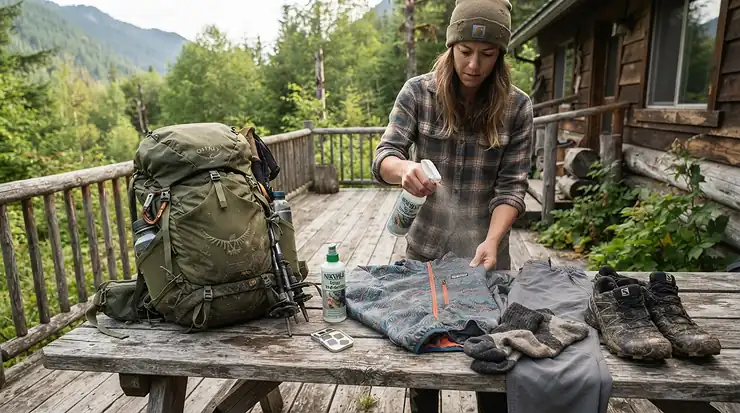
Permethrin spray for hiking clothes is a 0.5% permethrin fabric treatment you apply to shirts, pants, socks, and gaiters before a hike. It bonds to the fibers and incapacitates ticks, mosquitoes, and chiggers that touch the cloth. It is for clothing and gear only, never for skin.
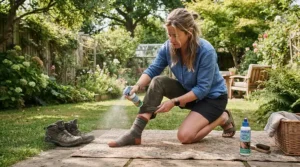
Most hikers think about bugs only after the first bite. By then you are scratching a welt, or worse, picking a nymph tick the size of a poppy seed out of your calf. The smarter move happens in the garage, days earlier, with a trigger bottle and a clothesline.
Here is why it works. Permethrin does not so much repel as ambush. In lab work reported by Live Science on CDC tick research, ticks that touched treated fabric showed a “hot-foot” reaction, and a large share tumbled off tilted pant legs entirely. They never reached skin.
This guide ranks seven real permethrin spray for hiking clothes options, from budget bottles to hunter-grade quarts. For each one, you get what the specs mean on the trail, how reviewers talk about it, and who should skip it. Along the way you will find application steps, wash durability facts, tent and gear tips, and safety rules that matter, such as the one about cats.
One honest note up front: this article is built from published specs, retailer listings, and independent reviews, not hands-on lab testing. Where evidence is thin, it says so.
Quick Comparison: Permethrin Spray for Hiking Clothes at a Glance
| Product | Size | Best For | Label Durability |
|---|---|---|---|
| Sawyer Premium Permethrin 24 oz (SP657) | 24 oz trigger | Best all-round value | Up to 6 washes / 6 weeks |
| Sawyer Premium Permethrin 12 oz (SP649) | 12 oz pump | Single hikers, one-season kits | Up to 6 washes / 6 weeks |
| Sawyer Permethrin Aerosol (SP602) | 9 oz aerosol | Quick touch-ups on boots and packs | Check label |
| Ben’s Clothing & Gear Repellent | 24 oz trigger | Budget large-bottle households | Up to 6 weeks |
| Zone Protects Realtree Outfitters Permethrin | 32 oz | Hunters, groups, big wardrobes | Around 5 washes (per roundups) |
| Repel Permethrin Clothing & Gear Aerosol | 6.5 oz aerosol | Glovebox backup | Up to about 2 weeks |
| Insect Shield Premium Permethrin Spray | 6 oz | Brand-name small jobs | Check label |
Reading the table, the Sawyer Premium Permethrin 24 oz (SP657) is the value anchor, since a big bottle at a modest price lets you treat several outfits at once. The aerosols trade volume for convenience, and Repel Permethrin Clothing & Gear Aerosol has the shortest stated window, so treat it as a top-up, not a foundation. If you hike every weekend, the volume bottles pay off fastest.
💬 Just one click — help others make better buying decisions too!😊
Top 7 Permethrin Spray for Hiking Clothes: Expert Analysis
1. Sawyer Premium Permethrin 24 oz Trigger Spray (SP657) — best all-round value for regular hikers
The Sawyer Premium Permethrin 24 oz Trigger Spray is the benchmark everything else gets measured against. It is a ready-to-use 0.5% permethrin solution, which means no mixing, no math, and no measuring cups.
The 24 oz size matters in practice. REI’s listing says it coats about four full outfits (shirt, trousers, socks), so one bottle can cover a long-sleeve shirt, convertible pants, and socks for two people. Sawyer says it dries odorless and does not stain, so you can wear it right after the drying window.
Based on the spec sheet and the retail data, the real appeal is the cost per outfit. At the time of research, retailer listings show an average rating around 4.6 out of 5 across tens of thousands of ratings. Reviewers consistently report easy application and no ticks on treated gear. The recurring caution is cats, since wet permethrin is dangerous to them.
Pros:
- ✅ Premixed at label strength, no prep needed
- ✅ Coats roughly four outfits per bottle
- ✅ Odorless and non-staining once dry
Cons:
- ❌ Needs re-treatment after about six washes
- ❌ Trigger sprayer can tire your hand on big jobs
Price range: typically under $20, so check current price. Verdict: the default pick unless you have a specific reason to go elsewhere.
2. Sawyer Premium Permethrin 12 oz Pump Spray (SP649) — right-sized for a one-hiker kit
If your hiking wardrobe is one shirt, one pair of pants, and a few pairs of socks, the Sawyer Premium Permethrin 12 oz Pump Spray matches your reality. It is the same 0.5% permethrin formula, and the listing says it coats two full outfits.
Why that matters: a half-used 24 oz bottle sitting in the garage can be a hazard if you have curious pets or kids. The smaller bottle limits what you store. It also packs into a car trunk or a gear bin without ceremony, which is handy for a road-trip season.
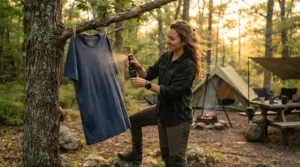
The usage rules are identical. Hang clothing outdoors, spray until damp, and let it dry about two hours, or four in humid weather. Reviewers on retail pages echo the larger bottle’s sentiment: simple application and good tick results. One shopper noted that the larger bottle sometimes costs less than the 12 oz on store shelves, which is a useful price-checking reminder. Since sizes and prices shift, compare the per-ounce cost before you buy.
Pros:
- ✅ Covers two outfits per bottle
- ✅ Same label formula as the larger Sawyer
- ✅ Easier to store safely
Cons:
- ❌ Often costs more per ounce than the 24 oz
- ❌ Runs out fast for families
Price range: roughly low-to-mid teens, so check current price. Verdict: great for solo hikers, but the bigger bottle usually wins on value.
3. Sawyer Permethrin Aerosol Spray 9 oz (SP602) — fastest touch-ups for boots, packs, and gaiters
Aerosols have one superpower: speed. The Sawyer Permethrin Aerosol Spray 9 oz lets you hit boots, gaiters, a pack, or a hat in seconds, with no pumping and no hand fatigue.
That convenience comes with trade-offs. Aerosol mist travels farther than trigger spray, so wind and indoor air matter more. Outdoor application is not just a recommendation, it is the rule. Treat it as a supplement to a trigger-bottle base treatment, the way you would carry a small repair kit next to a full toolbox.
Retail pages show an average rating around 4.5 out of 5 across a couple hundred reviews, which signals solid satisfaction. Because aerosol labels vary on coverage and durability, check the can for exact claims rather than assuming it matches the trigger bottle.
Pros:
- ✅ Quick, even coverage on awkward surfaces
- ✅ Compact for a trunk or gear bin
- ✅ Good fit for boots and packs
Cons:
- ❌ Mist drifts more in wind
- ❌ Less coverage per dollar than big bottles
Price range: around $10-$12, so check current price. Verdict: a handy complement, not a main supply.
4. Ben’s Clothing & Gear Insect Repellent 24 oz — big-bottle budget pick for families
Ben’s built its reputation on DEET sprays, but the Ben’s Clothing & Gear Insect Repellent 24 oz is a 0.5% permethrin product aimed at clothes, tents, and packs. Independent roundups position it as the budget-friendly large bottle, with an ergonomic sprayer and a no-lingering-scent finish.
Its stated protection window is up to six weeks, which matches the category. The practical question is whether the per-ounce price beats Sawyer’s 24 oz at checkout time. Prices swing, so run that comparison on the day you buy.
Where does it fit? Families who treat several wardrobes at once and want a trusted outdoor brand name. Reviewers in roundups call out the easy trigger and unscented dry finish. However, I could not verify a large body of customer reviews specifically for this bottle, so treat the sentiment as lighter evidence than the Sawyer data.
Pros:
- ✅ Large bottle suits multi-person households
- ✅ Dries with little lingering scent
- ✅ Familiar outdoor brand
Cons:
- ❌ Fewer verified reviews to lean on
- ❌ Price advantage over Sawyer varies
Price range: roughly in line with other 24 oz bottles, so check current price. Verdict: a solid alternative when the price is right.
5. Zone Protects Realtree Outfitters Permethrin 32 oz — largest bottle for hunters and groups
The Zone Protects Realtree Outfitters Permethrin 32 oz comes from the hunting world, where treating camo, boots, and blind gear is routine. The formula is 0.5% permethrin, marketed as odorless when dry and endorsed by Realtree.
Size is the story. A quart-sized bottle suits people who treat whole closets, from hiking pants to jackets to packs. One roundup lists it at around five washes before retreatment, slightly under the 6-wash claim on Sawyer, which is worth knowing if you wash often.
Reviewers in hunting circles praise the odorless dry, which matters when scent control is the whole game. For hikers, the extra capacity is the main attraction. Just remember that bigger bottles stay in your home longer, so storing it away from pets still matters.
Pros:
- ✅ 32 oz volume for large wardrobes
- ✅ Odorless dry finish prized by hunters
- ✅ Brand tested in rugged field use
Cons:
- ❌ Costs more upfront than smaller bottles
- ❌ Roundups list a slightly shorter wash window
Price range: a step above standard 24 oz bottles, so check current price. Verdict: best for groups or heavy users, overkill for a single hiker.
6. Repel Permethrin Clothing & Gear Aerosol 6.5 oz — pocket-size backup for surprise bug days
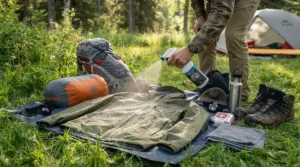
The Repel Permethrin Clothing & Gear Aerosol 6.5 oz is an unscented can for shoes, clothing, tents, and gear. It is EPA registered, and retailers describe it as protecting against mosquitoes, mites, and ticks.
Here is the catch worth reading twice. The retailer Q&A says it should not be used more than once every two weeks regardless of washing, and that you should launder before retreating. A stated window of up to two weeks makes it a short-term booster rather than a season-long base.
Retail listings show around 4.4 out of 5 across several dozen reviews, which is decent but a smaller sample. Use it for a surprise bug-heavy trip, then plan your main prep with a trigger bottle.
Pros:
- ✅ Small can fits easily in a pack
- ✅ Unscented formula
- ✅ Quick to apply to shoes and gear
Cons:
- ❌ Short stated protection window
- ❌ Retreatment limit every two weeks
Price range: roughly mid-teens or less, so check current price. Verdict: a fine backup, not a main strategy.
7. Insect Shield Premium Permethrin Spray 6 oz — brand-name formula for small jobs
Insect Shield is famous for factory-treated clothing, so the Insect Shield Premium Permethrin Spray 6 oz carries a credibility boost. It is the DIY cousin, aimed at clothing, gear, and tents.
At 6 oz, it is designed for small jobs: a pair of pants, a hat, or a day-pack. Reviews are very limited. One retailer page shows a high average, but on only a couple of reviews, which is far too small a sample to draw conclusions from.
The takeaway: if brand name matters to you, it is a reasonable option, but you are paying for familiarity, not for proven performance advantages. If you want the brand’s durability, the mail-in factory service is the real differentiator, which comes up later in this guide.
Pros:
- ✅ Trusted brand in permethrin clothing
- ✅ Compact size for light use
- ✅ Suits small treatment jobs
Cons:
- ❌ Very few verified reviews
- ❌ Higher cost per ounce than big bottles
Price range: from roughly the mid-teens, so check current price. Verdict: good for brand loyalists, but the data does not show it beating Sawyer.
Side-by-Side: Specs, Price Ranges, and Ratings
| Product | Price Range* | Rating Signal | Best For |
|---|---|---|---|
| Sawyer Premium Permethrin 24 oz (SP657) | Under $20 | About 4.6/5, tens of thousands of ratings | All-round value |
| Sawyer Premium Permethrin 12 oz (SP649) | Low-mid $10s | About 4.4-4.6/5 on retail pages | One-hiker kits |
| Sawyer Permethrin Aerosol 9 oz (SP602) | About $10-$12 | About 4.5/5, a couple hundred reviews | Touch-ups |
| Ben’s Clothing & Gear 24 oz | Similar to other 24 oz | Limited verified data | Budget families |
| Zone Protects Realtree Outfitters 32 oz | Premium for volume | Strong in hunting circles | Big wardrobes |
| Repel Permethrin Aerosol 6.5 oz | Mid-teens or less | About 4.4/5, smaller sample | Short-term backup |
| Insect Shield Premium Permethrin 6 oz | From mid-teens | Too few reviews | Small jobs |
*Prices change often, so check current price before buying.
The pattern is clear. Sawyer Premium Permethrin 24 oz (SP657) combines the broadest review base with the best per-outfit cost, while Zone Protects Realtree Outfitters Permethrin 32 oz wins only when volume matters. Smaller cans like Repel Permethrin Clothing & Gear Aerosol and Insect Shield Premium Permethrin Spray are tools for niche situations.
How to Apply Permethrin Spray for Hiking Clothes: A Step-by-Step Usage Guide
Buying the right bottle is half the job. Application technique decides whether you get six solid washes or six sad ones. Here is the playbook, built from label guidance and university safety advice.
- Pick the right items. Treat outerwear: long-sleeve shirts, pants, socks, gaiters, hats, and packs. Skip underwear, per EPA guidance.
- Work outdoors, in calm air. A wind-free, ventilated spot beats a garage with a closed door. The University of Illinois repellent safety guide advises gloves and outdoor application.
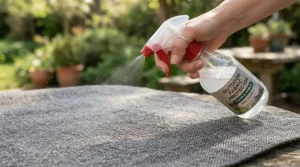
- Spray clothes off your body. Hang them on hangers or a line. Never treat clothing while you are wearing it.
- Wet, do not drench. Consumer Reports’ advice is to make fabric slightly damp and a bit darker, not soaked. Hit seams, cuffs, and hems.
- Dry fully. Two hours is the typical guidance, four in humid weather.
- Treat shoes more often. Boots and socks take abuse, so retreat them more frequently than shirts.
- Wash separately. The EPA says to launder treated clothes apart from untreated items.
Common first-month mistakes: spraying right before a trip (give it time to dry), forgetting cuffs and socks (ticks climb from the ground), and spraying until fabric is dripping (waste, not extra protection).
Treat your system like layered armor. Permethrin on clothing, a skin-safe repellent on exposed skin, and a quick body check after each hike create the strongest defense.
Real-World Scenarios: Matching the Right Bottle to the Right Hiker
Specs are abstract. Here are three profiles to show how the choice plays out.
The weekend warrior (hikes 2-3 times a month, one wardrobe). A single hiker with two long-sleeve shirts, two pairs of pants, and a stack of socks needs about two outfits. The Sawyer Premium Permethrin 12 oz (SP649) fits, though the Sawyer Premium Permethrin 24 oz (SP657) often gives better per-ounce value. Treat before the first big spring hike, then again after about six washes.
The family of four (camping and day hikes). Four wardrobes disappear quickly. A Ben’s Clothing & Gear Insect Repellent 24 oz or Sawyer SP657 gives the volume, and the Zone Protects Realtree Outfitters Permethrin 32 oz helps if you also treat tents and packs. Store the bottle high and away from pets.
The long-distance hiker (weeks on trail). Resupply logistics matter here. Many through-hikers treat clothing before departure and rely on a compact aerosol like Sawyer Permethrin Aerosol (SP602) for boots and socks mid-trip. If you have the time, factory treatment (covered below) is worth pricing out.
Problem → Solution Guide: Fixing the Most Common Permethrin Headaches
Problem 1: “The spray smells.” Some formulas carry a solvent odor while wet, and one roundup flags a kerosene-like smell before drying. Solution: spray outdoors and let clothing dry fully. Odor fades as it dries, and Sawyer calls its formula odorless once dry.
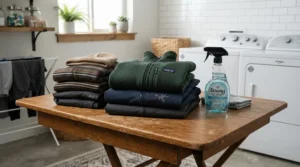
Problem 2: “I keep running out of protection.” Solution: track washes. A simple tally on a sticky note in the laundry area works. Retreat around six washes for DIY sprays, or sooner if you notice ticks crossing fabric.
Problem 3: “I have a cat.” Solution: this one is serious. The University of Illinois guidance warns that wet permethrin is toxic to cats. Keep cats out of the treatment area, and keep treated items away until fully dry.
Problem 4: “Which fabric can I treat?” Solution: the label and manufacturer guidance decide. Sawyer says its product will not harm gear. Test an inconspicuous spot on delicate items first.
Problem 5: “My boots keep getting bitten around the ankle.” Solution: socks, gaiters, and boot cuffs are the highest-risk zones. Spray those thoroughly, and retreat shoes on a tighter schedule than shirts.
How to Choose Permethrin Spray for Hiking Clothes
What should you look for in a permethrin spray for hiking clothes? Choose a 0.5% permethrin formula with an EPA registration, a bottle size that fits your wardrobe, and a stated protection window that matches how often you wash.
- Confirm the active ingredient. Look for 0.5% permethrin on the label. Anything labeled for pets or livestock may not be intended for clothing.
- Check for EPA registration. The EPA says to look for the registration number on repellent products.
- Match bottle size to your closet. A 24 oz bottle covers roughly four outfits, per REI’s listing. Do the math before buying.
- Weigh the wash window. Most DIY sprays advertise around six washes or six weeks. If you hike constantly, plan for more frequent retreating.
- Pick a sprayer you can handle. Trigger, pump, and aerosol each have trade-offs in speed, drift, and hand fatigue.
- Consider odor and dry time. Odorless-when-dry formulas are friendlier for gear storage and tent use.
- Compare cost per outfit, not sticker price. A bottle that looks cheap may cover fewer outfits.
Permethrin Treated Clothing Spray for Tick Protection: What the Science Says
Permethrin treated clothing spray for tick protection is not folk wisdom. The CDC recommends treating clothing and gear with 0.5 percent permethrin products, according to coverage of CDC guidance.
The mechanism is physical. When ticks touch treated fabric, they get irritated and try to escape, which is why they often fall off vertical pant legs before reaching skin. This matters because nymph ticks, the stage often linked to Lyme transmission, are tiny and easy to miss.
Research on factory-treated clothing adds weight. Insect Shield’s own study page reports a 93 percent reduction in total tick bites among treated-clothing wearers in a worker trial, though that is a vendor-hosted summary of a specific factory treatment, not a guarantee for DIY sprays.
The honest read: permethrin treated clothing spray for tick protection lowers risk meaningfully, but it does not make you bite-proof. Pair it with tucked pants, tick checks, and a shower soon after your hike.
Permethrin Spray for Tents and Camping Gear: Beyond Your Wardrobe
Permethrin spray for tents and camping gear turns your campsite into a less appealing place for crawling insects. Manufacturers say products like Sawyer Premium Permethrin 24 oz (SP657) work on tents, sleeping bags, netting, and packs, as well as clothes.
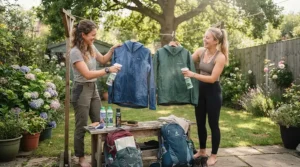
Focus on the entry points. Treat door zippers, the tent skirt, mesh panels, and the groundsheet edge, since those are where insects crawl in. Treated packs and boot tongues add another layer. Bring clothing, tents, and packs through the same drying routine.
Two cautions apply. First, do not spray the inside of a sleeping area you will be breathing in, and let everything dry completely outdoors. Second, check your tent’s care label for coating compatibility. When in doubt, test a hidden spot.
If you camp often, the Zone Protects Realtree Outfitters Permethrin 32 oz gives the volume to treat a tent plus the family wardrobe in one session.
Fabric Treatment Compared: DIY Spray vs Factory-Treated Clothing vs Skin Repellents
A fabric treatment sounds simple until you compare the options. Here is how a DIY permethrin spray stacks up against factory treatment and skin-only repellents.
| Option | Wash Durability | Upfront Cost | Best For |
|---|---|---|---|
| DIY permethrin spray (e.g., Sawyer Premium Permethrin 24 oz) | About 6 washes | Low | Flexible, budget-friendly coverage |
| Factory treatment (e.g., Insect Shield mail-in) | Up to 70 washes (claimed) | Around $125 per mailer | Long-term, heavy users |
| Skin repellent only | Hours per application | Low | Exposed skin, not clothing |
The trade-off is convenience versus cost. Factory fabric treatment lasts far longer, but you need to plan ahead and ship clothes away. DIY spray gives you control and speed. For most hikers, the best path is DIY spray for flexibility and factory treatment for a favorite pair of pants you wear constantly.
Wash Durability: How Long Does Permethrin Spray Really Last?
Wash durability is where marketing meets laundry day. Sawyer-style sprays advertise about six washes or six weeks. Factory-treated garments claim up to 70 washes.
A CDC-hosted study on permethrin-impregnated clothing adds nuance. It reports that factory garments are rated through 70 washes, but notes other research found significant drops in permethrin content after as few as five washes. Translation: real-world wash durability depends on fabric, wash method, and the specific treatment.
What shortens life: hot water, harsh detergent, and frequent washing. What helps: cold water, gentle cycles, and washing less often. Also note that clothes you do not wash still need retreating, since sun and wear reduce effectiveness.
Use wash durability as a rule of thumb, not a promise. Track washes, inspect problem areas, and retreat early if you are heading into heavy tick country.
Tick and Mosquito Barrier: Layering Permethrin With Skin Repellent
A true tick and mosquito barrier is layered, not single. Permethrin protects clothing. Skin-applied repellents protect the rest of you.
CDC and EPA-aligned guidance says to use EPA-registered repellents containing ingredients such as DEET, picaridin, or oil of lemon eucalyptus on exposed skin. Permethrin covers fabric only, so you apply a skin-safe repellent to hands, neck, and face.
Think of it as two shields. Clothing treated with a product like Sawyer Premium Permethrin 24 oz (SP657) stops crawlers on fabric, while a skin repellent handles biting insects that land on bare skin. Adding a nightly tick check completes the barrier.
This layered approach also matters for mosquito-heavy trips. Permethrin works on contact for mosquitoes landing on your clothes, while skin repellents deter bites on uncovered areas.
Safety, Regulations, and Compliance Guide
Permethrin is an insecticide, so safe handling matters. The EPA’s page on repellent-treated clothing says there is no evidence of reproductive or developmental effects from exposure to permethrin in factory-treated clothing, and it notes the military has used treated uniforms since the 1990s.
Practical rules:
- Never apply permethrin to skin.
- Wear gloves and spray outdoors.
- Keep wet permethrin and treated items away from cats.
- Wash treated clothing separately.
- Follow label directions, because using a product inconsistently with its label violates federal law.
Also remember that DIY spray rules differ from factory-treated clothing rules. If you have specific health concerns, such as pregnancy or young children, check with a clinician and read the label carefully.
Long-Term Cost: What Does Permethrin Spray for Hiking Clothes Really Cost Per Outfit?
Sticker price lies. Cost per outfit tells the truth.
| Product | Approx. Coverage | Price Range* | Rough Cost per Outfit |
|---|---|---|---|
| Sawyer Premium Permethrin 24 oz (SP657) | About 4 outfits | Under $20 | Around $4-$5 |
| Sawyer Premium Permethrin 12 oz (SP649) | About 2 outfits | Low-mid $10s | Around $5-$7 |
| Factory mail-in treatment | Many garments per mailer | Around $125 | Lower per wash over time |
*Estimated from listing ranges; check current price.
Doing the arithmetic, a under-$20 bottle covering about four outfits works out to roughly $4-$5 per treatment. If each treatment lasts about six washes, that is well under a dollar per wash. Factory treatment costs more upfront but spreads across up to 70 washes, so heavy users may come out ahead.
The takeaway: Sawyer Premium Permethrin 24 oz (SP657) wins for flexibility, while factory treatment suits your most-worn garments. Pair the two for the best value.
✨ Don’t Miss These Exclusive Deals!
🔍 Take your permethrin spray for hiking clothes routine to the next level with these carefully selected products. Click on any highlighted item to check current pricing and availability. These tools will help you create a safer, bite-free trail season your whole crew will love!
FAQ: Permethrin Spray for Hiking Clothes
❓ How long should treated clothes dry before I wear them?
❓ Can I spray permethrin on my hiking boots?
❓ Is permethrin spray safe around pets?
❓ Can I treat my clothes while wearing them?
❓ Does permethrin work on mosquitoes as well as ticks?
Conclusion: Your Best Move for Permethrin Spray for Hiking Clothes
Permethrin spray for hiking clothes is one of the cheapest, most effective upgrades you can make before a hike. The real work is not the spraying itself, it is the system around it: the right bottle, a proper dry, a wash tally, and a skin repellent for exposed areas.
For most people, the Sawyer Premium Permethrin 24 oz Trigger Spray (SP657) is the smart starting point thanks to its value and review base. Solo hikers can go with the Sawyer Premium Permethrin 12 oz Pump Spray (SP649), while families or hunters may prefer the Zone Protects Realtree Outfitters Permethrin 32 oz. Keep the Sawyer Permethrin Aerosol (SP602) or Repel Permethrin Clothing & Gear Aerosol around for quick touch-ups, and consider Ben’s Clothing & Gear Insect Repellent 24 oz or Insect Shield Premium Permethrin Spray if the price or brand fits.
Treat early, wash gently, retreat on schedule, and check yourself for ticks after every outing. Do that, and the trail belongs to you, not the bugs.
Recommended for You
- [Add your blog post link 1]
- [Add your blog post link 2]
- [Add your blog post link 3]
Disclaimer: This article contains affiliate links. As an Amazon Associate, I earn from qualifying purchases. If you purchase products through these links, we may earn a small commission at no additional cost to you.
✨ Found this helpful? Share it with your friends! 💬🤗
